
10kV Photovoltaic European-Style Prefabricated Box-Type Substation Product Manual
Product Overview
The YBM-12 10kV photovoltaic-specific European-style prefabricated transformer substation is an integrated outdoor power distribution device specifically optimized for the intermittent output, large load fluctuations, and frequent start-stop operations of photovoltaic power generation. The product adopts a classic European-style three-compartment independent structure, integrating four core units : a 10kV high-voltage switchgear, a photovoltaic-specific distribution transformer, a 0.4kV low-voltage switchgear, and an intelligent transformer substation monitoring and control system .
The equipment undergoes complete assembly, wiring, withstand voltage testing, and testing and commissioning at the factory. On-site, it only requires hoisting into place and connecting photovoltaic cables and grid lines for operation, eliminating the need for a civil engineering power distribution room. It is primarily used for low-voltage power collection, stabilization, protection, intelligent monitoring, and 10kV grid-connected transmission in photovoltaic power plants. It possesses photovoltaic-specific characteristics such as harmonic resistance, impact resistance, low loss, unattended operation, and remote monitoring, making it a core supporting device for distributed photovoltaic grid connection.
Model Meaning
YBM-12/□/0.4
- Y - Pre-installed equipment
- B - Substation
- M - European-style three-compartment independent structure
- 12 - Maximum operating voltage 12kV, compatible with 10kV photovoltaic grid-connected systems.
- □ - Transformer rated capacity (kVA), standard: 400, 630, 800, 1000, 1250, 1600kVA , 2000kVA
- 0.4 - Rated output voltage on the low-voltage side: 0.4kV

Environmental Conditions for Use
1. Ambient temperature: -30℃~+45℃, suitable for extreme operating conditions of photovoltaic power stations in summer high temperature and winter low temperature;
2. Altitude: ≤1000m; for high-altitude areas, customized solutions with enhanced insulation and anti-condensation can be provided.
3. Relative humidity: Daily average ≤95%, monthly average ≤90%, no persistent condensation, no icing;
4. Environmental conditions: Suitable for outdoor use, it can withstand sun exposure, rain, wind and sand, and frost, and contains no corrosive or explosive gases;
5. Installation site: The site should be flat, well-drained, well-ventilated, with a stable foundation and no risk of water accumulation or soaking.
Main Technical Parameters
|
Rated voltage |
10kV |
|
Low-voltage rated voltage |
0.4kV (dedicated for photovoltaic grid connection) |
|
Rated frequency |
50Hz |
|
Transformer capacity |
400kVA~1600kVA (low loss for photovoltaic applications) |
|
Rated current of high-voltage switchgear |
630A, 1250A |
|
High voltage short-time withstand current |
20kA, 25kA |
|
Low-voltage main circuit current |
630A~2500A |
|
Low-voltage short-circuit breaking capacity |
30kA, 50kA |
|
Enclosure protection rating |
IP44 (high protection for outdoor photovoltaic systems) |
|
Insulation class |
Class F |
|
Operating noise |
≤55dB |
|
Measurement and control functions |
Supports telemetry, remote signaling, remote control, remote adjustment (four remotes), fault alarm, and data upload. |
Overall Structural Layout
This photovoltaic European-style prefabricated transformer adopts a fully isolated three-compartment independent structure , divided into a high-voltage compartment, a transformer compartment, and a low-voltage monitoring and control compartment. Each compartment is completely isolated using thickened galvanized steel plates and equipped with fireproof, heat-insulating, arc-proof, and independent ventilation and heat dissipation structures to prevent the spread of faults across compartments. Each compartment has independent doors, independent lighting, and independent door locks, ensuring that operation and maintenance do not interfere with each other and providing a high level of safety.
Standard layout: high-voltage cabinet room on the left, photovoltaic transformer room in the middle, and low-voltage cabinet + transformer control room on the right , fully adaptable to the needs of photovoltaic cable access, grid connection and transmission, and intelligent monitoring.
Detailed Explanation of the Four Core Units
■ High-voltage switchgear unit (high-voltage compartment)
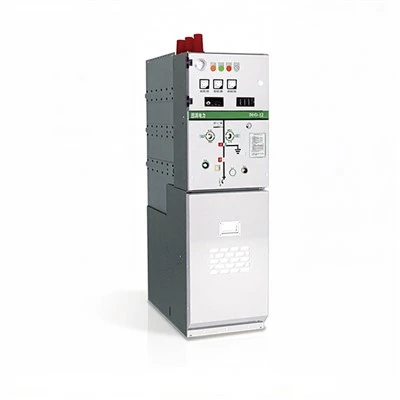
The high-voltage switchgear is a 10kV photovoltaic grid-connected high-voltage control and protection unit, standardly equipped with an XGN15-12 ring main unit or SF6 gas-insulated switchgear. It can be configured with incoming line cabinets, load switches, fuses, surge arresters, live display devices, and grounding switches. The entire set is equipped with a five-proof interlocking device. The cabinet is sealed and corrosion-resistant, with strong insulation performance, and is suitable for long-term outdoor operation.
Main functions : Responsible for the opening and closing control of 10kV grid-connected lines and grid isolation; possesses comprehensive protection against short circuits, overloads, and grounding faults; quickly cuts off the high-voltage grid-connected power supply in case of photovoltaic system failure, protecting downstream transformers and low-voltage equipment; realizes high-voltage lightning protection, insulation monitoring, and prevention of misoperation, ensuring the safe and stable operation of the photovoltaic grid-connected high-voltage side.
■ Photovoltaic-specific transformer unit (transformer room)
The transformer adopts a photovoltaic-specific low-loss distribution transformer , with options including S13/S20 fully sealed oil-immersed transformers or SCB14/SCB15 dry-type transformers. It is specifically optimized for the intermittent power generation, harmonic interference, and large load fluctuations of photovoltaic systems, featuring impact resistance, overload tolerance, low harmonic loss, and stable temperature rise. The transformer room is equipped with a natural ventilation + forced air cooling system, temperature control monitoring, maintenance lighting, oil leakage prevention, and fireproof isolation devices.
Main functions : Stabilize and transform the 0.4kV low-voltage power output from the photovoltaic inverter to match the 10kV grid parameters, achieving smooth power conversion; effectively suppress photovoltaic harmonics and reduce power generation losses; adapt to special operating conditions such as photovoltaic daytime start-up and shutdown and load fluctuations on cloudy and sunny days, ensuring efficient grid connection of photovoltaic power generation.
■ Low-voltage switchgear unit (low-voltage compartment)
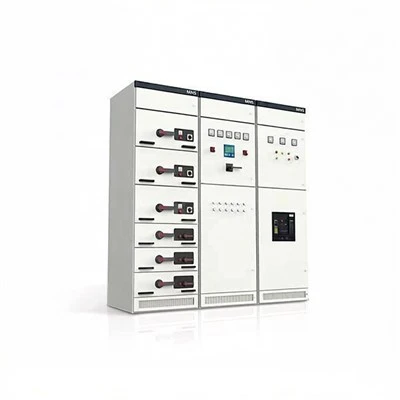
The low-voltage switchgear is a photovoltaic power collection and distribution unit, consisting of a photovoltaic-specific incoming line cabinet, an outgoing line cabinet, a reactive power compensation cabinet, and a metering cabinet. It is equipped with intelligent molded case circuit breakers, photovoltaic-specific fuses, surge protectors, reactive power compensation devices, and high-precision metering instruments. The cabinet features neat wiring, a modular design, and is dustproof, waterproof, and anti-aging.
Main functions : Centrally collects the output power of multiple photovoltaic inverters, and completes voltage stabilization, filtering, reactive power compensation, and power metering; provides comprehensive protection against short circuit, overload, leakage, and lightning surge; improves the quality of photovoltaic power, enhances the power factor, avoids grid-connected harmonics exceeding standards, and provides low-voltage side protection for the entire unit and grid-connected safety.
■ Substation Measurement and Control Unit (Measurement and Control Core)
The transformer substation monitoring and control device is the intelligent core of the photovoltaic transformer substation, integrating data acquisition, logic control, fault protection, and remote communication functions. It is equipped with industrial-grade acquisition modules, communication gateways, status indicator lights, and back-end interface, and is specifically designed for unattended photovoltaic power stations.
Main functions
1. Data telemetry : Real-time acquisition of operating parameters such as high and low voltage, current, power, power generation, power factor, and equipment temperature;
2. Status Remote Signaling : Real-time monitoring of switch open/closed status, equipment fault signals, cabinet door status, and abnormal temperature and humidity;
3. Remote control : Supports remote opening and closing of circuit breakers, fault reset, and equipment start/stop control from the backend;
4. Intelligent protection : It has overvoltage, undervoltage, overcurrent, overload, reverse current protection, and islanding protection functions, and is compatible with the grid-connected photovoltaic anti-islanding safety requirements;
5. Data Upload : Supports RS485 and Ethernet communication, compatible with photovoltaic power station backend and State Grid monitoring system, enabling unattended operation, remote maintenance, automatic fault alarm and recording.
Core Features of the Product (Photovoltaic Specific)
1. Optimized for photovoltaic operating conditions: The design is optimized for intermittent photovoltaic power generation, harmonic interference, and large load fluctuations, making it shock-resistant, preventing malfunctions, and overload resistant.
2. Remote intelligent monitoring and control: Standard configuration includes a transformer substation monitoring and control system, supporting remote monitoring, data uploading, and fault alarms, meeting the requirements for unattended operation and maintenance of photovoltaic systems;
3. Three-compartment independent safety structure: high and low voltage and transformers are completely isolated, with five-proof interlocking, multiple protections against lightning and fire, and high grid connection safety;
4. High efficiency and energy saving: Adopting a new energy-efficient photovoltaic-specific transformer + intelligent reactive power compensation reduces power generation losses and increases the power generation of the power station;
5. Strong outdoor weather resistance: The whole machine is waterproof, dustproof, UV resistant, and corrosion resistant, making it suitable for various outdoor photovoltaic scenarios;
6. High integration and fast construction: The complete set is prefabricated and debugged in the factory, and directly hoisted and connected to the grid on site, which greatly shortens the construction period of photovoltaic projects;
7. Convenient operation and maintenance: Modular layout, automatic recording of fault data by the monitoring and control system, making inspection, troubleshooting and maintenance simple and efficient.
Installation and Debugging
1. Foundation construction: Pour concrete foundation according to drawings, reserve photovoltaic cable trench, high and low voltage outgoing holes, and grounding position, and ensure that the foundation is flat and drainage is unobstructed;
2. Equipment placement: The entire housing is hoisted, leveled, and secured to ensure even stress distribution and no tilting.
3. Wiring construction: Connect the photovoltaic low-voltage combiner cable and the 10kV grid-connected high-voltage cable in accordance with specifications, and ensure reliable grounding with a grounding resistance ≤4Ω;
4. Overall commissioning: Conduct insulation tests, withstand voltage tests, protection setting verification, remote control point-to-point measurement and control, anti-islanding and anti-backflow simulation tests;
5. Grid connection trial operation: The grid connection is formally completed after the no-load, light-load and full-load trial operation is carried out in stages to confirm that the measurement and control data, protection functions and power quality are normal.
Operation and Maintenance
1. During the grid-connected operation of the equipment, it is strictly forbidden for non-professionals to open the hatch or touch the live parts. High-voltage operations must be carried out by certified personnel.
2. Daily operation and maintenance: Relying on the transformer substation monitoring and control backend, monitor equipment operation data in real time, and check power generation, equipment temperature, and fault alarm records daily;
3. Quarterly inspection: Check the enclosure sealing, ventilation and heat dissipation, and the tightness of the wiring terminals; clean the dust inside the cabinet; and verify the measurement, control, communication, and protection devices.
4. Annual maintenance: Insulation testing of the entire machine, verification of protection settings, instrument calibration, and transformer operation condition inspection to ensure the accuracy and reliability of the measurement and control system.
Transportation and Storage
1. The equipment should be transported upright throughout the entire process. Tilt, inversion, impact, and heavy pressure are strictly prohibited. Take precautions against rain, shock, and collision.
2. The storage site should be dry, well-ventilated, and free from corrosion, and should avoid prolonged exposure to sunlight, rain, and sand accumulation.
Quality Assurance and After-Sales Service
1. This product is manufactured in strict accordance with national standards and photovoltaic industry standards. All tests are completed before it leaves the factory and it can only be shipped after passing the tests.
2. Warranty period: 12 months from the start of operation or 18 months from the date of manufacture (whichever comes first), free repair and replacement of parts for non-human-caused damage;
3. Provide a full range of technical services, including on-site hoisting guidance, wiring and debugging, measurement and control communication integration, and operation and maintenance training.
Hot Tags: electric traction substation, China electric traction substation manufacturers, suppliers, factory, fixed type switchgear, High Distribution Cabinet, Isolating-switch, PV-string-fusing, Smart-combiner-box, snyb 40 5 skid mounted