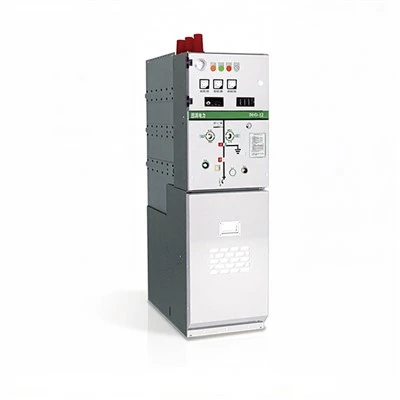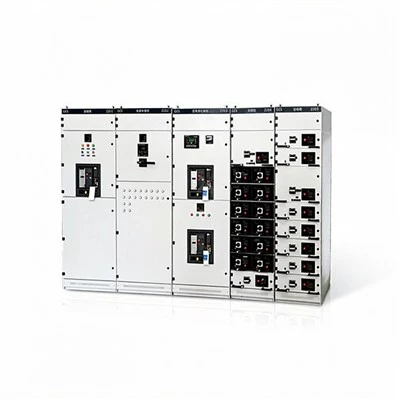

Intelligent High-Frequency Switching DC Power Supply Panel Product Manual
Product Overview
This series of GZDW intelligent high-frequency switchgear is a dedicated DC operating power supply device designed for substations, power distribution rooms, fire protection power distribution systems, industrial and mining enterprises, high-rise buildings, and other scenarios. It is designed and manufactured strictly in accordance with GB/T 19826-2014 "General Technical Conditions and Safety Requirements for DC Power Supply Equipment in Power Engineering" and DL/T459 power industry standard. The equipment integrates AC power distribution, high-frequency charging modules, intelligent monitoring systems, battery banks, insulation monitoring, DC power supply, and step-down silicon chain protection, serving as a core uninterruptible DC power supply device for power control, relay protection, automatic devices, emergency lighting, and switch opening and closing.
The equipment adopts a modular high-frequency switching power supply architecture, supports N+1 redundancy backup, and features fully automatic equalization/float charging conversion, intelligent battery management, insulation fault monitoring, remote four-way communication, and overload and short-circuit protection. When the mains power is normal, the charging module provides regulated power and float charging maintenance for the battery; when the mains power fails, it automatically switches to independent power supply from the battery pack, ensuring uninterrupted operation of the secondary control and protection systems. This effectively prevents equipment failure or malfunction caused by AC power outages. It is widely adaptable to power supply and fire protection scenarios, operates stably, is maintenance-free, and meets State Grid and fire protection acceptance standards.
Model Meaning
GZDW□ / □
- G: High-frequency switching power supply
- Z: DC
- D: Power supply
- W: Microcomputer Intelligent Monitoring
- Front□ : Rated capacity of the battery (AH)
- Rear□ : System rated DC voltage (110V/220V)

Main Technical Parameters
|
Serial Number |
Technology Projects |
Parameter Indicators |
|
1 |
AC input voltage |
AC220V/380V±15% 50Hz (Dual-channel automatic switching optional) |
|
2 |
System DC rated voltage |
DC110V / DC220V (optional) |
|
3 |
Battery Configuration Specifications |
12V lead-acid maintenance-free batteries 20AH~200AH |
|
4 |
Voltage regulation accuracy |
≤±0.2% (stable throughout the entire range from no-load to full-load) |
|
5 |
Steady flow accuracy |
≤±0.5% |
|
6 |
Ripple voltage |
≤0.1% of rated voltage |
|
7 |
Charging mode |
Fully automatic float charging/equalizing charging intelligent switching and temperature compensation |
|
8 |
Protection function |
Overvoltage, undervoltage, overcurrent, short circuit, module overheating, and battery reverse connection protection. |
|
9 |
Insulation monitoring function |
Supports busbar/branch insulation fault detection, fault alarm, and location. |
|
10 |
Communication function |
Standard configuration includes RS485, supports Modbus protocol, and enables remote monitoring via four remote control systems. |
|
11 |
Backup power time |
Standard configuration ≥120min (full load condition) |
|
12 |
Protection level |
IP30 (for indoor power distribution rooms) |
|
13 |
Work environment |
Temperature -10℃~+50℃, humidity ≤95% with no condensation |
Core Structure and Functional Description
■ Intelligent Monitoring Unit (System Core Brain)
This DC power supply is equipped with a fully intelligent microcomputer monitoring system , which is the control core of the entire equipment. It is responsible for the data acquisition, logic control, parameter adjustment, fault alarm and remote communication of the entire system, replacing the traditional analog control method and realizing unattended fully automatic operation.
Core features :
1. Fully automatic intelligent control : Real-time collection of all-dimensional parameters such as AC input, DC bus voltage, output current, battery capacity, and ambient temperature, automatically judging the system operating condition without manual intervention.
2. Intelligent charging and discharging management : Automatically switches between float charging and equalizing charging modes based on battery voltage, charging current and ambient temperature; automatically starts equalizing charging activation when the battery is undervoltage or has not been charged for a long time, and automatically switches to float charging maintenance after being fully charged, preventing battery overcharging, undercharging, sulfation and aging, and greatly extending the battery's service life.
3. Comprehensive fault alarm : Real-time audible and visual alarms, on-screen pop-up display of fault codes, and storage of fault records are provided for all faults such as AC power failure, module failure, bus overvoltage and undervoltage, branch short circuit, battery failure, and insulation abnormality, facilitating maintenance and troubleshooting.
4. Remote four-remote functions : Supports telemetry, remote signaling, remote control, and remote adjustment. It can remotely view operating parameters, reset faults, and adjust charging parameters, adapting to the operation and maintenance needs of intelligent power distribution rooms and unattended substations.
■ High-frequency switching charging module (power supply core)
The equipment adopts a high-frequency modular charging power supply with an N+1 redundant hot backup design. A single module failure will not affect the operation of the whole machine. Unlike traditional thyristor rectifier equipment, it has advantages such as high efficiency, low ripple, low temperature rise, small size and no noise.
Core features :
1. High-precision voltage and current regulation : The output voltage and current are dynamically adjusted throughout the entire process, with high voltage and current regulation accuracy and extremely low output ripple. It can accurately adapt to the charging characteristics of the battery and avoid damage to secondary precision equipment due to voltage fluctuations.
2. Hot-swappable redundant operation : Modules support hot-swappable replacement, and maintenance does not require downtime; multiple modules operate in parallel to share the load, and the load is automatically distributed, resulting in extremely high operational stability.
3. Multiple autonomous protections : Each module has built-in overvoltage, overcurrent, short circuit, and overheat automatic shutdown protection. The faulty module will automatically shut down, while the remaining modules will continue to operate normally, ensuring uninterrupted power supply to the system.
■ Battery pack (emergency backup power)
Equipped with a maintenance-free lead-acid battery pack, it serves as an emergency backup DC power source after a mains power outage. It is the core energy storage unit for uninterrupted power supply of the DC power supply panel, requiring no daily electrolyte replenishment and maintenance, and is suitable for long-term float charge standby conditions.
Operating logic : When the mains power is normal, the charging module float-charges and stabilizes the battery to keep it fully charged and ready for operation; when the mains power suddenly fails or a phase is lost, the battery pack instantly and uninterruptedly supplies power to provide a stable DC power supply for the switching, relay protection, fire protection secondary equipment, and emergency lighting, thus preventing the system from losing power and shutting down.
■ Insulation Monitoring Unit (Core of Safety Protection)
Built-in intelligent insulation monitoring device, specifically designed for real-time monitoring of the insulation status of positive and negative busbars to ground in DC systems, solving the industry pain point of not being able to self-check single-point and multi-point grounding faults in DC systems.
Core function : When a grounding, leakage, or insulation aging fault occurs in the DC circuit, the device immediately issues an audible and visual alarm, accurately locates the faulty branch, eliminates the risk of relay protection maloperation, failure to operate, short circuit and fire caused by DC grounding, and ensures the safe and stable operation of the power secondary system.
■ Step-down silicon chain and DC power supply unit
The system comes standard with a step-down silicon chain voltage regulator, which automatically reduces and adjusts the voltage to address the issue of excessively high voltage during battery equalization charging, ensuring that the control bus voltage remains within the allowable range for the equipment and protecting downstream instruments, relays, controllers, and other low-voltage precision equipment. Multiple independent DC power outputs are provided, each with independent overload and short-circuit protection, ensuring separate power supply without interference and adapting to the power supply needs of multiple secondary equipment circuits.
Scope of Application
1. DC power supply for relay protection and switch operation in high and low voltage power distribution rooms, transformer substations, and substations;
2. DC power supply for secondary control, linkage, and emergency lighting in fire pump room and fire control room;
3. DC operating power supply for power distribution systems in industrial and mining enterprises, commercial complexes, and residential communities;
4. DC power supply equipment for unattended power distribution rooms and intelligent power operation and maintenance systems;
5. All power and electrical systems that require uninterruptible DC operating power and fault insulation monitoring.
Installation and Usage Instructions
■ Installation Environment Requirements
1. The equipment is installed in an indoor power distribution room or fire control room, in an environment that is well-ventilated, dry, free of dust, corrosive gases, and flammable and explosive materials;
2. The cabinet is vertically and securely fixed, with sufficient space for front and rear maintenance, and is kept away from heat sources and vibration sources;
3. The cabinet is reliably grounded with a grounding resistance of ≤4Ω to ensure the safety of equipment and personnel;
4. Do not install outdoors, expose to rain or direct sunlight, or use in damp or condensing environments.
■ Installation and Wiring Steps
1. Once the equipment is in place and secured, check that the cabinet, charging module, monitor, battery, and insulation monitoring device are intact and undamaged;
2. Connect the AC input power supply, distinguish the phase sequence and neutral wire, tighten the wiring and ensure proper insulation. For dual-input models, complete the dual power supply switching wiring.
3. Strictly follow the schematic diagram to connect the positive and negative terminals of the battery pack, and prevent reverse connection or incorrect connection. Ensure proper insulation protection for the battery wiring.
4. Connect the DC power output loads and communication signal lines of each branch, and verify that the circuits are correct;
5. Before powering on, thoroughly check all circuits for short circuits, loose connections, and incorrect connections, and ensure that the switches are in the open position;
6. Power on and test step by step to verify that the charging, voltage regulation, equalization and float charging switching, insulation monitoring, fault alarm, and battery switching functions are all normal.
■ Equipment Operation Specifications
1. The equipment is normally in fully automatic operation mode, and the monitoring system autonomously manages charging and discharging and fault monitoring, without the need for frequent manual operation;
2. Maintain a constant AC power supply and avoid arbitrarily disconnecting the power to prevent damage to the battery from deep discharge;
3. It is strictly forbidden to change system parameters, short-circuit protection circuits, or add or remove charging modules and battery configurations without authorization;
4. After the mains power fails and the battery has completely discharged, AC power should be restored in a timely manner to recharge and activate the battery.
Maintenance and Care
1. Daily inspection: Check the screen voltage, current, and battery status daily to confirm that there are no alarms, the modules are operating normally, and the cabinet is not overheating or making abnormal noises;
2. Monthly maintenance: Clean dust inside the cabinet, tighten wiring terminals, check the appearance of the battery for bulging and leakage, and verify the insulation monitoring alarm function;
3. Quarterly maintenance: Inspect the switching accuracy of equalization and floating charging, the current sharing effect of the modules, verify the system parameters, and test the battery power switching function when AC power is interrupted;
4. Annual maintenance: Comprehensive inspection of battery capacity and internal resistance, replacement of aging parts, simulation of fault testing of the whole machine, and calibration of monitoring accuracy;
5. Equipment that has been out of service for a long time should be charged and maintained once a month to prevent the battery from sulfating, losing power, and becoming unusable.
Troubleshooting Common Faults
|
Fault phenomenon |
Cause of the fault |
processing method |
|
AC power failure alarm |
Power outage, circuit breaker tripping, loose wiring |
Check the upstream AC power supply, reset the switch, and tighten the incoming line terminals. |
|
DC voltage too low, battery undervoltage |
Long-term mains power outages, charging module failures, and battery aging leading to capacity degradation |
Restore AC power supply, inspect and replace faulty modules, reactivate or replace batteries. |
|
Insulation fault alarm |
DC branch grounding, line dampness, insulation aging, terminal leakage |
Based on the branch line location, locate the grounding point, dry the line, and repair any damaged insulation. |
|
No output from charging module, module malfunction |
Module overload protection, module damage, communication anomaly |
Power off and restart to reset, check for short circuits in the load, and replace the faulty charging module. |
|
Unable to automatically switch between equalization and float charging |
Incorrect monitoring parameter settings, faulty temperature probe, or abnormal system logic. |
Reset system parameters, replace temperature probe, and restart monitoring system. |
Safety Precautions
1. Equipment installation, commissioning, maintenance, and repair must be performed by certified electrical professionals, and the high and low voltage electrical safety operating procedures must be strictly followed.
2. When the equipment is energized, it is strictly forbidden to open the cover and touch the live terminals, battery terminals, and internal components of the module;
3. Battery packs store a large amount of electrical energy. When inspecting the battery circuit, the power must be disconnected to prevent short circuits, sparks, and electric shocks.
4. It is forbidden to modify the system charging parameters, remove the protection device, or change the circuit wiring without authorization, so as to avoid system malfunction and battery damage;
5. The equipment is a critical backup power source for fire protection and must not be shut down or used for other purposes without authorization. It must be reliably deployed in emergency situations.
6. Regularly test the insulation and backup power supply functions to ensure that the equipment can switch power normally when the mains power is interrupted.
Product Warranty
This product is manufactured and inspected in strict accordance with national and power industry standards. Before leaving the factory, it undergoes comprehensive testing including power-on, voltage stabilization, charging and discharging, insulation monitoring, and fault protection. Only products that pass this test are released. The entire unit is covered by an 18-month warranty, with the charging module, monitor, and battery also covered by the original manufacturer's warranty. During the warranty period, the manufacturer will repair and replace parts free of charge for damage not caused by human error or force majeure. Faults caused by unauthorized modifications, improper operation, or use in harsh environments are not covered under warranty.
Hot Tags: dc power supply panel, China dc power supply panel manufacturers, suppliers, factory, environmentally friendly hv switchgear, High Voltage Gas Insulated Switchgear, Outdoor Grid connected PV Cabinet, PV-grid-connection, three phase distribution cabinet, zgs 12 bulk substation