Overview
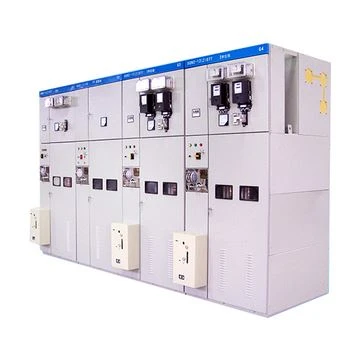
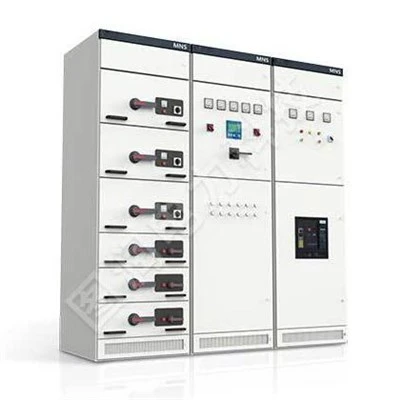
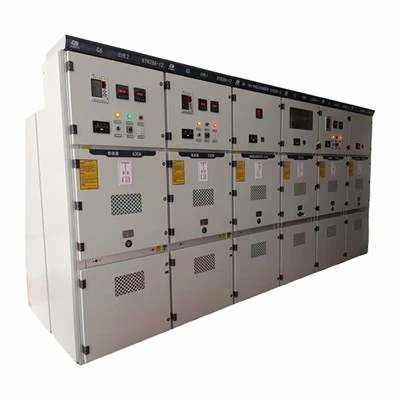
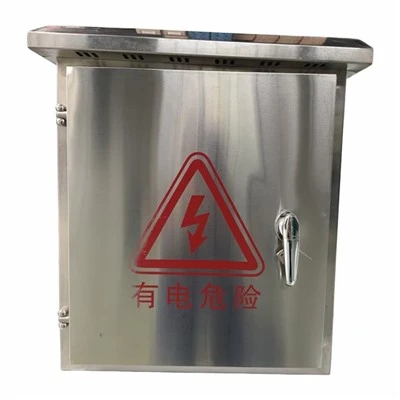
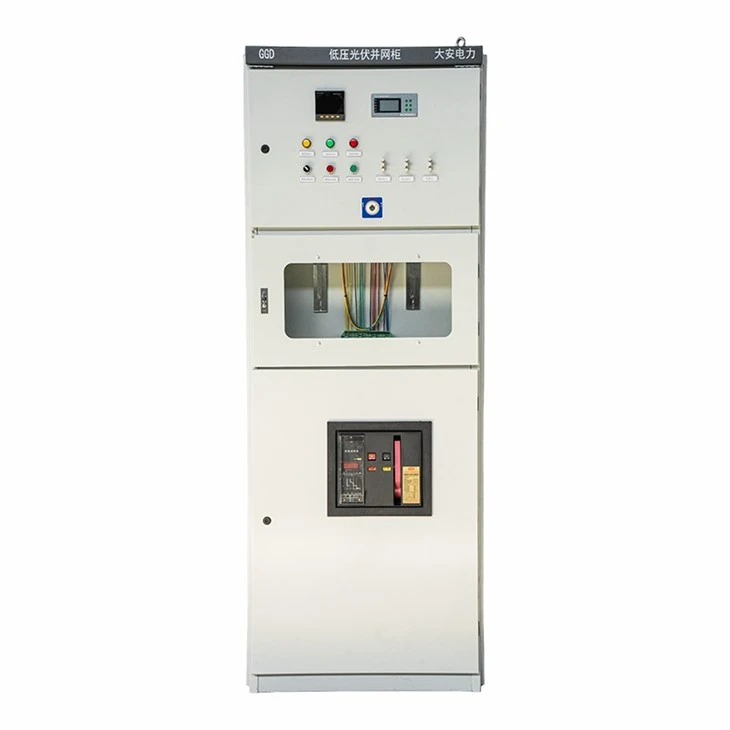
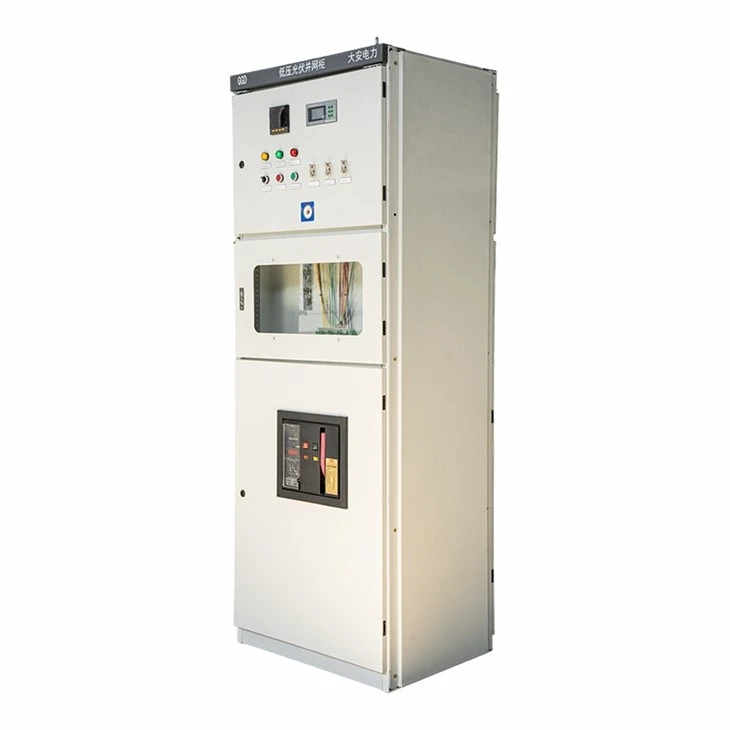
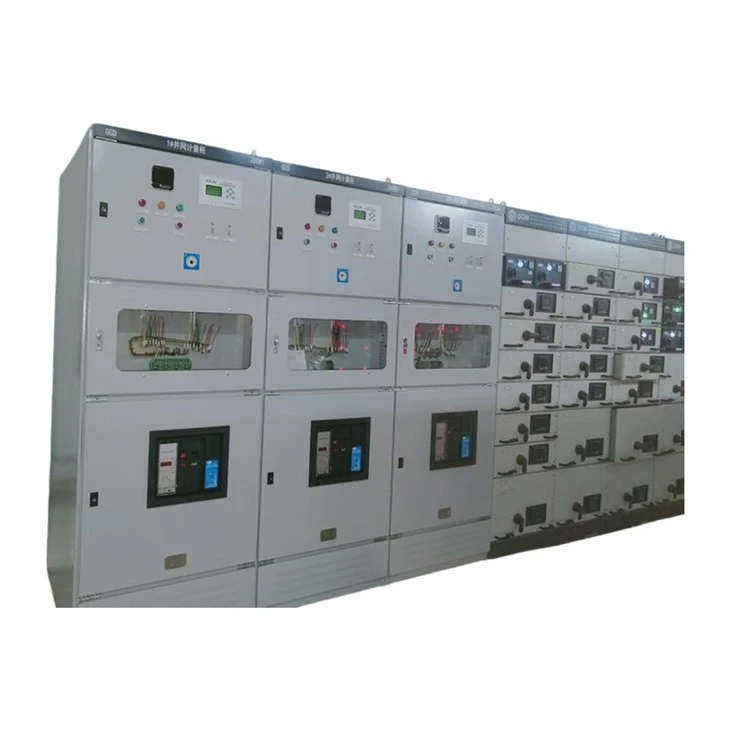
The low-voltage grid-connected cabinet (also known as photovoltaic grid-connected power distribution cabinet / grid-connected switchgear) is the core power distribution equipment in photovoltaic (PV) power generation systems for realizing AC power grid connection and transmission. It connects the AC combiner box (or inverter) to the power grid (or transformer) and serves as the key interface device between the distributed PV generation system and the public power grid.
This product is designed based on the GGD low-voltage cabinet structure and is suitable for three-phase four-wire or three-phase five-wire power systems with an AC frequency of 50Hz and a rated operating voltage of 400V and below. It is mainly used to connect PV power generation systems to low-voltage power grids, realizing functions such as electrical energy grid connection, safety protection, and intelligent monitoring. It is widely used in distributed PV power generation projects such as commercial and industrial rooftop PV, residential PV, and small-scale power stations.

Technical Parameters
|
Parameter Name |
Technical Specification |
|
Rated Operating Voltage |
AC 400V (380V) |
|
Rated Insulation Voltage |
AC 690V |
|
Rated Frequency |
50Hz / 60Hz (Optional) |
|
Rated Operating Current |
630A ~ 3150A |
|
Rated Impulse Withstand Voltage |
8kV / 12kV |
|
Rated Short-Time Withstand Current (1s) |
30kA / 50kA / 80kA |
|
Protection Level |
IP30 ~ IP55 (Optional) |
|
Execution Standards |
GB7251.1-2013, NB/T10204-2019 |
Core Functions
Three Core Functions
Electrical Connection Hub:
Integrates the low-voltage electrical energy output from the PV inverter and achieves on/off control with the power grid through circuit breakers, disconnectors, and other components.
Safety Protection Barrier:
Built-in anti-islanding protection, overcurrent/overvoltage/undervoltage/high-low frequency protection, reverse power protection, etc., ensuring comprehensive system safety.
Data Interaction Node:
Equipped with an intelligent monitoring module for real-time power quality monitoring, supporting remote communication and data upload.
Product Features
- Sturdy Cabinet Structure: Made of high-quality cold-rolled steel plates, formed by bending and welding, with high strength and good rigidity. The surface is treated with electrostatic spraying.
- Excellent Heat Dissipation Design: Heat dissipation slots are provided at both the upper and lower parts of the cabinet, forming a natural ventilation air path with good heat dissipation effect
- Complete Grounding Protection: The instrument door is connected to the frame using multi-strand copper flexible wires, forming a complete grounding protection circuit for the entire cabinet.
- Selectable Protection Levels: IP30~IP55 multiple protection levels available, adapting to different installation environments, both indoor and outdoor.
- Component Quality Assurance: Core components can be selected from international brands such as Schneider, ABB, Siemens, ensuring high reliability.
- Modular Design: Adopts standardized modular design, making installation and maintenance convenient with strong scalability.
- Integrated Intelligent Monitoring: Can integrate functions such as electric energy metering, power quality monitoring, and remote communication.
Cabinet Structure and Composition
■ Cabinet Structure
Cabinet Material: 2.0mm high-quality cold-rolled steel plate.
Surface Treatment: Electrostatic spraying after phosphating treatment. Color is optional (RAL7035 by default).
Installation Method: Fixed floor-standing installation.
Overall Dimensions: Width 800/1000mm × Depth 600/800mm × Height 2200mm.
■ Standard Configuration
- Main Circuit Breaker (Dedicated for grid connection)
- Disconnector Switch
- Anti-islanding Protection Device
- Surge Protective Device (SPD)
- Voltage / Current Transformers
- Smart Energy Meter
- Temperature and Humidity Controller
- Grounding Terminal Block
Detailed Protection Functions
Eightfold Electrical Safety Protection
|
Protection Function |
Technical Specification |
Description |
|
Anti-islanding Protection |
Response time < 20ms |
Quickly cuts off when the power grid loses power to prevent reverse power feeding. |
|
Overvoltage Protection |
270V ± 5V |
Automatically trips when voltage is too high. |
|
Undervoltage Protection |
170V ± 5V |
Automatically trips when voltage is too low. |
|
Overfrequency Protection |
50.5Hz ± 0.2Hz |
Automatically trips when frequency is too high. |
|
Underfrequency Protection |
49.5Hz ± 0.2Hz |
Automatically trips when frequency is too low. |
|
Reverse Power Protection |
Settable threshold |
Prevents electrical energy from flowing backward to the grid. |
|
Overcurrent Protection |
1.2 times rated current |
Automatically protects when overloaded. |
|
Surge Protection |
Response time < 10μs |
Protects against lightning strikes and surge voltages. |
Installation and Commissioning
■ Installation Environment Requirements
Altitude: Not exceeding 2000m.
Ambient Temperature: −5∘C∼+40∘C−5∘C∼+40∘C, with the 24-hour average temperature not exceeding +35∘C+35∘C.
Relative Humidity: Not exceeding 50% at a maximum temperature of +40∘C+40∘C. Higher humidity is allowed at lower temperatures.
Installation Site: No severe vibration, no corrosive gases, no conductive dust.
■ Installation Steps
Check the equipment appearance and accessories for integrity.
Position the cabinet and adjust the levelness and verticality.
Fix the cabinet and ensure reliable grounding (grounding resistance ≤ 4Ω).
Connect the incoming and outgoing cables according to the wiring diagram.
Check the correctness of the wiring and tighten all wiring terminals.
Set the protection device parameters and calibrate the meters.
Perform insulation testing before power-on to ensure good insulation.
Commission the equipment step-by-step and verify all protection functions.
Operation and Maintenance
■ Daily Inspection
Check whether the cabinet temperature is normal and whether there is any abnormal odor.
Observe whether the instrument readings are normal and whether there are any alarm signals.
Check whether the circuit breakers and switch positions are correct.
Check whether the cabinet door seals are intact.
■ Regular Maintenance (Quarterly)
Clean the dust inside the cabinet to keep ventilation smooth.
Tighten all wiring terminals and check for looseness.
Check whether the grounding connections are reliable.
Test whether all protection functions are working properly.
Check the status of the surge protector and replace failed modules in a timely manner.
Ordering Information
1.Specify the product model, rated current, and protection level.
2.Provide the single-line system diagram and secondary schematic diagram.
3.Clarify the brand requirements for components (domestic high-quality brands are the default).
4.Detailed explanations are required for special functional requirements (e.g., anti-reverse power flow, power quality monitoring, communication functions).
5.Special requirements for cabinet color and overall dimensions should be specified.
6.If other ancillary equipment is required, please specify it along with the order.
Hot Tags: power generation grid-connection cabinet, China power generation grid-connection cabinet manufacturers, suppliers, factory