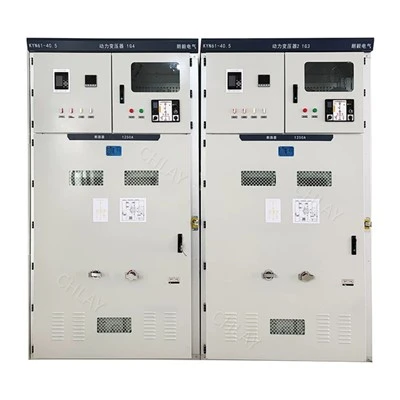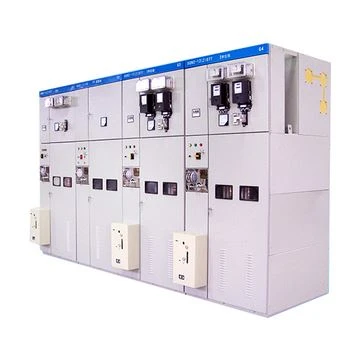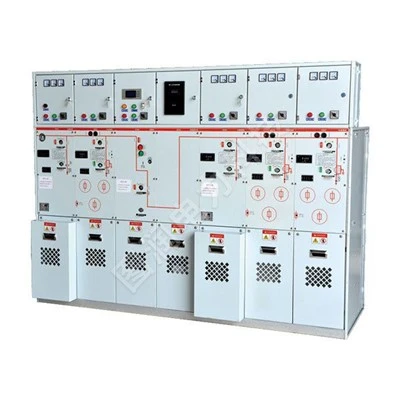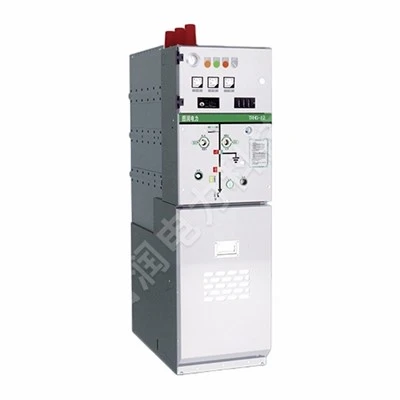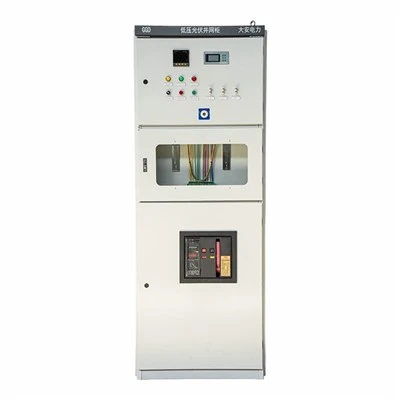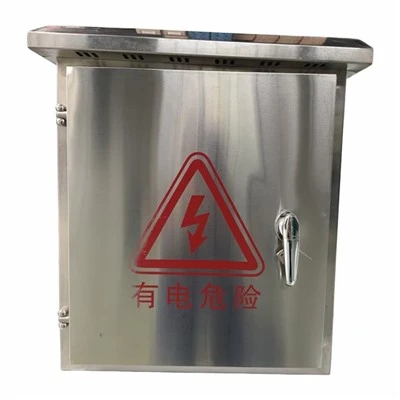

GCK-0.4 Low-voltage withdrawable switchgear product manual
Product Overview
The GCK-0.4 series of low-voltage withdrawable switchgear is a new generation of combined, modular, and safe low-voltage complete power distribution equipment, designed and manufactured in strict accordance with the national standards GB7251.1 "Low-voltage switchgear and controlgear assemblies" and GB/T14048 "Low-voltage switchgear and controlgear assemblies" . The equipment is suitable for three-phase AC 50Hz, rated operating voltage 400V (660V optional) low-voltage power distribution systems, used as a power distribution center (PC) and motor control center (MCC), mainly for power reception, distribution, motor start/stop control, line overload and short-circuit protection, and terminal power distribution control.
The cabinet adopts a modular steel structure and modular design, with independent functional zones throughout. It features pull-out units, protection against misoperation, high interchangeability, safety isolation, and flexible expansion capabilities. The drawer units have three working positions: connection, testing, and separation. Single circuits can be replaced, repaired, and tested without power interruption, without affecting the normal operation of other circuits in the cabinet, significantly improving power supply continuity and maintenance safety. The product is widely used in low-voltage power distribution scenarios with high requirements for power supply reliability and safety, such as factories, industrial parks, commercial complexes, high-rise buildings, hospitals, schools, municipal engineering projects, and pump station rooms.
Model Meaning
GCK - 0.4
- G: Fixed low-voltage switchgear (complete power distribution equipment)
- C: Pull-out structure
- K: Control Center (MCC/PC integrated type)
- 0.4: Rated operating voltage 0.4kV (400V)

Main Technical Parameters
|
Serial Number |
Technology Projects |
Parameter Indicators |
|
1 |
Rated operating voltage |
AC 400V (660V optional) |
|
2 |
Rated insulation voltage |
AC 690V |
|
3 |
Rated frequency |
50Hz |
|
4 |
Rated current of horizontal bus |
630A~4000A |
|
5 |
Vertical bus rated current |
400A~1600A |
|
6 |
Rated short-time withstand current (1s) |
15kA, 30kA, 50kA, 80kA |
|
7 |
Rated peak withstand current |
30kA, 63kA, 100kA |
|
8 |
Drawer unit specifications |
Modular combinations of 1/4 unit, 1/2 unit, 1 unit, and 2 unit |
|
9 |
Drawer workstation mode |
Visual operation of connection, testing, and separation stations |
|
10 |
Protection level |
IP30 (Indoor Standard) |
|
11 |
Cabinet structure |
Modular steel structure with prefabricated assembly and bolted connections |
|
12 |
Operating ambient temperature |
-5℃~+40℃ |
|
13 |
relative humidity |
≤95% (no condensation) |
|
14 |
Anti-misoperation function |
Mechanical interlocking three-station anti-misoperation |
Core Structure and Functional Description
The GCK-0.4 switchgear adopts a fully independent four-compartment structure , divided into a top busbar compartment, a front functional drawer compartment, a rear cable compartment, and a bottom incoming/outgoing line compartment. Each compartment is isolated from the others and does not interfere with each other, effectively preventing fault propagation, phase-to-phase short circuits, and arc spread, making its safety far superior to traditional fixed distribution cabinets. The entire unit uses a 20mm modular mounting hole design, is assembled, has a stable structure, low deformation rate, and strong expandability.
■ Modular pull-out drawer unit (core advantage)
All outgoing lines and control circuits in this cabinet use standardized drawer units, possessing extremely high versatility and interchangeability. Drawers of the same specifications can be interchanged arbitrarily, and faulty circuits can be quickly replaced with spare drawers, enabling uninterrupted power repair and rapid power restoration. The drawers are strictly equipped with three-position mechanical interlocks : connection position (normal operation), test position (power-on testing, no load), and separation position (complete power-off isolation). The position status is clearly visible, and the operation hierarchy is clearly defined.
The drawer integrates circuit breakers, contactors, thermal relays, fuses, control buttons, indicator lights, secondary wiring terminals, and other components, featuring high integration, neat wiring, and robust protection. The drawer operation is equipped with a mechanical interlock, preventing the circuit breaker from closing if not fully engaged, and preventing forced removal while energized, thus completely eliminating the risk of plugging/unplugging under load or short circuits due to misoperation.
■ Busbar System (Core of Safe Power Supply)
The main busbar of the cabinet adopts a rear-mounted horizontal copper busbar layout, which is neatly arranged, evenly stressed, and has strong resistance to electrodynamic forces, effectively resisting short-circuit inrush current. The horizontal main busbar runs through the entire cabinet, while the vertical branch busbars are independently configured, ensuring independent power supply to each circuit without affecting others, resulting in low temperature rise, stable current carrying capacity, and low losses. The busbar is fully covered with an insulating sheath, with sufficient insulation distance between phases and between phases and ground, preventing creepage, flashover, and short-circuit faults caused by dust and moisture, making it suitable for long-term continuous full-load operation.
■ Comprehensive protection and control functions
Depending on the circuit configuration, multiple protection functions can be achieved, including short-circuit protection, overload protection, phase loss protection, undervoltage protection, and motor overload thermal protection. The power circuit can realize direct motor starting, star-delta starting, soft starting, and frequency conversion control; the power distribution circuit can realize hierarchical power distribution, zone protection, and coordinated setting between upper and lower levels. The power distribution hierarchy is clear, and the protection coordination is reasonable, effectively avoiding the problems of cascading tripping and large-scale power outages.
■ Mechanical Interlocking Anti-misoperation System
The drawer unit is equipped with a dedicated mechanical interlock mechanism to implement a forced anti-misoperation logic: the drawer can only be unlocked and pulled out when it is in the separated/test position; the circuit breaker is prohibited if the drawer is not fully in place; the drawer cannot be pulled out when the switch is closed, thus eliminating plugging and unplugging under load and misoperation under power from a hardware perspective, ensuring the safety of equipment and personnel.
■ Incoming and Outgoing Lines and Wiring Structure
The cabinet supports multiple cabling methods, including top-in/top-out, top-in/bottom-out, and bottom-in/bottom-out. The cable compartment is spacious and the cabling is neat and organized, with separation of strong and weak current wiring and independent primary and secondary wiring, facilitating construction wiring, daily inspections, and future expansion and upgrades. The bottom of the cabinet is equipped with a dedicated sealing structure to effectively prevent dust, small animals, and condensation from entering.
Scope of Application
1. Power distribution and centralized control of motors in industrial plants and production workshops (MCC cabinet);
2. Main power distribution center (PC cabinet) for industrial parks and factories, and workshop power distribution centers;
3. Low-voltage power distribution rooms in commercial complexes, office buildings, high-rise buildings, and residential communities;
4. Power distribution systems for hospitals, schools, municipal engineering projects, pump stations, machine rooms, and fire protection facilities;
5. All 0.4kV low-voltage power distribution scenarios that require high reliability, uninterrupted maintenance, modular expansion, and centralized control .
Installation and Usage Instructions
■ Installation Environment Requirements
1. The equipment is a dedicated indoor low-voltage complete set of equipment, installed in a dry, ventilated, and clean power distribution room, free from corrosive gases, flammable and explosive dust, severe vibration, and strong electromagnetic interference;
2. The foundation channel steel should be horizontal, straight, and firmly fixed. The cabinets should be neatly arranged on the ground with the verticality meeting the standard. The cabinets should be tightly spliced together with uniform gaps.
3. The entire cabinet is reliably grounded, with good continuity of protective grounding and a grounding resistance of ≤4Ω, eliminating the risk of leakage and static electricity accumulation;
4. The power distribution room should be equipped with dustproof, moistureproof, condensation-proof, and small animal-proof measures, and the ambient temperature and humidity should meet the equipment operation requirements.
■ Pre-installation inspection
1. Check that the cabinet is in good condition, the paint is smooth, the structure is not deformed, and the cabinet doors, locks, and drawers slide smoothly without jamming.
2. Verify that the component model, specifications, and capacity are consistent with the design drawings, and that the components are intact, the wiring is secure, and the markings are clear;
3. Check that the busbar connections are secure, the insulation is intact, and there are no loose connections, oxidation, or damage.
4. The three-position interlock function of the drawer was tested to be reliable, flexible in operation, and effective in locking, with no failures or malfunctions.
5. Before powering on, measure the insulation resistance of each circuit. If the value is qualified, there is no risk of short circuit, leakage, or grounding fault.
■ Operating Procedures
1. Drawer power supply operation : Confirm that the drawer is fully pushed in → close the operating mechanism → the circuit is energized and operates normally; when testing is required, place the drawer in the test position, and it can be energized for testing and run without load.
2. Drawer power outage maintenance : Disconnect the circuit switch → confirm power outage → unlock the drawer → pull it out to the separation station, and carry out maintenance and replacement work after completely isolating the power supply.
3. It is strictly forbidden to forcibly push or pull the drawer while the switch is closed and energized. It is also strictly forbidden to violently operate the interlocking mechanism or remove the locking device.
4. Strictly follow the power distribution hierarchy for power supply and de-energization, starting with the main distribution before the branch distribution and the primary distribution before the secondary distribution. Unauthorized switching operations are prohibited.
5. During operation, closely monitor the circuit current, temperature rise, and indicator light status. Long-term overload operation is strictly prohibited.
Maintenance and Care
1. Routine inspection: Check that the cabinet indicator lights and instrument displays are normal, there are no abnormal noises, no odors, no localized overheating, and that the drawers are in the correct positions and the cabinet doors are tightly closed;
2. Monthly maintenance: Clean dust and debris from inside the cabinet and on the surface of the drawers, check the smoothness of the drawers sliding and the reliability of the interlocks, and tighten the busbars and wiring terminals;
3. Quarterly maintenance: Verify the operating performance of circuit breakers, contactors, and protection components; check that the wiring of secondary control circuits is secure; and test that the start-stop and protection functions are normal.
4. Annual maintenance: Comprehensive testing of busbar temperature rise and insulation performance, maintenance of drawer guide rails and operating mechanisms, replacement of aging auxiliary parts, and conduct of simulated protection transmission tests;
5. During humid seasons, strengthen ventilation and dehumidification to prevent components from getting damp, insulation from deteriorating, and contacts from oxidizing, thus avoiding malfunctions and short circuits.
Troubleshooting Common Faults
|
Fault phenomenon |
Cause of the fault |
Processing method |
|
The drawer cannot be closed. |
Drawer not in place, mechanical interlock, secondary circuit fault, protection trip not reset |
Push the drawer back to the locked position, reset the protection device, and troubleshoot and repair any faults in the secondary control circuit. |
|
Drawer push-pull jamming |
Guide rail dust and rust, deformation and misalignment, interlock not unlocked, foreign objects stuck. |
Clean dust from the guide rails, lubricate and maintain the mechanism, correct cabinet deformation, unlock interlocks, and remove foreign objects. |
|
Frequent circuit tripping |
Overload, short circuit, grounding fault, improper protection parameter settings, aging components |
Inspect downstream load faults and line insulation defects, adjust protection parameters appropriately, and replace aging components. |
|
The equipment generates heat and the temperature rise is too high during operation. |
Loose terminals, oxidized contacts causing poor contact, prolonged overload, poor ventilation |
Tighten wiring terminals during power outage, grind and repair oxidized contacts, control operating load, and clean ventilation channels. |
|
Indicator light not lit, control malfunction |
Loose secondary wiring, damaged indicator lights, abnormal control power supply, faulty push-button switches |
Check and tighten secondary wiring, replace damaged indicator lights and operating components, and restore control power. |
Safety Precautions
1. Equipment installation, commissioning, operation, and maintenance must be carried out by certified electricians in accordance with regulations and strictly adhere to low-voltage electrical safety operating procedures;
2. During the operation of the equipment while it is energized, it is strictly forbidden to open the cabinet door, disassemble the drawers, or touch the internal busbars and live terminals without authorization;
3. It is strictly forbidden to remove or short-circuit the drawer mechanical interlock anti-misoperation device, it is strictly forbidden to forcibly plug or unplug the drawer while it is energized, and it is forbidden to open or close the circuit under load;
4. All cabinet repairs, drawer replacements, and wiring modifications must be carried out only after power is off, the power is tested, and a label is attached . Work can only proceed after confirming that there is no power.
5. It is strictly forbidden to operate equipment beyond its rated current or temperature for extended periods. It is also strictly forbidden to alter component specifications or disable protection functions without authorization.
6. Regularly check the cabinet's grounding, interlocking mechanism, and insulation status to prevent safety accidents caused by grounding failure or misoperation.
Product Warranty
This product is manufactured and inspected in strict accordance with national standards for low-voltage complete sets of equipment. Before leaving the factory, it undergoes comprehensive testing, including insulation testing, continuity testing, mechanical operation, interlocking functions, and protective transmission checks, ensuring qualified performance and reliable operation. The equipment comes with a 24-month warranty. During the warranty period, the manufacturer will repair or replace any structural defects or functional failures caused by non-human-caused damage or force majeure. Failures caused by unauthorized modifications, improper operation, overloading, human-caused damage, harsh environmental conditions, or natural disasters are not covered by the warranty.
Hot Tags: low and medium voltage switchgear, China low and medium voltage switchgear manufacturers, suppliers, factory