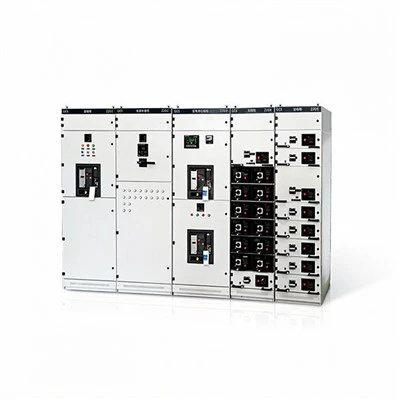

Power frequency, typically referring to the standard frequency of alternating current (AC) in an electrical power system, is a fundamental characteristic that significantly impacts the performance and functionality of fixed - type switchgear. As a reputable supplier of fixed - type switchgear, I have witnessed firsthand how power frequency variations can bring about both challenges and opportunities in the electrical industry.


1. Electrical Insulation Performance
One of the most crucial aspects affected by power frequency is the electrical insulation within the fixed - type switchgear. Electrical insulation is designed to prevent the flow of current between conductive parts and the enclosure of the switchgear. At the standard power frequency (50Hz or 60Hz in most parts of the world), the insulation experiences a certain level of dielectric stress.
When the power frequency deviates from the standard, the dielectric stress on the insulation materials changes. Higher frequencies generally lead to increased dielectric losses in the insulation. These losses manifest as heat, which can gradually degrade the insulation material over time. For example, the molecular movement within the insulation material becomes more intense at higher frequencies, causing the insulation to age faster. This can result in reduced insulation resistance, increased leakage current, and ultimately, a higher risk of electrical breakdown.
On the other hand, lower frequencies may not fully utilize the insulation's capabilities. The design of the insulation in fixed - type switchgear is optimized for the standard power frequency. At lower frequencies, the dielectric stress is lower than expected, and the insulation may be over - designed, leading to unnecessary costs in the manufacturing process.
2. Magnetic Core Losses in Transformers and Inductors
Fixed - type switchgear often includes transformers and inductors, which rely on magnetic cores to transfer and store electrical energy. The power frequency has a direct impact on the magnetic core losses in these components.
Core losses consist of two main types: hysteresis losses and eddy - current losses. Hysteresis losses occur due to the repeated magnetization and demagnetization of the magnetic core. The hysteresis loss is proportional to the frequency. As the power frequency increases, the hysteresis loss in the magnetic core also increases. This means that at higher frequencies, more electrical energy is converted into heat within the magnetic core, reducing the overall efficiency of the transformer or inductor.
Eddy - current losses are caused by the induced circulating currents within the magnetic core. These losses are proportional to the square of the frequency. A small increase in power frequency can lead to a significant increase in eddy - current losses. For instance, if the power frequency doubles, the eddy - current losses increase by a factor of four.
As a fixed - type switchgear supplier, we need to carefully consider the power frequency when selecting transformers and inductors for our products. For applications where the power frequency may vary, we may choose magnetic core materials with lower core losses or design the components to withstand the increased heat generated at non - standard frequencies.
3. Arc Extinction in Circuit Breakers
Circuit breakers are an essential part of fixed - type switchgear, responsible for interrupting the electrical circuit in case of a fault. The arc extinction process in circuit breakers is highly influenced by the power frequency.
When a circuit breaker interrupts the current, an arc is formed between the contacts. The arc needs to be extinguished quickly to prevent damage to the circuit breaker and the electrical system. The power frequency affects the arc's characteristics, such as its voltage, current, and duration.
At higher power frequencies, the arc voltage and current change more rapidly. This can make it more difficult to extinguish the arc, as the arc may reignite more easily. Circuit breakers need to be designed to handle these rapid changes in arc characteristics. For example, they may require more advanced arc - extinction technologies, such as using SF6 gas or vacuum interrupters, to ensure reliable arc extinction at higher frequencies.
Conversely, at lower power frequencies, the arc duration may be longer, which can also pose challenges for arc extinction. The longer the arc lasts, the more energy is dissipated, increasing the risk of damage to the circuit breaker contacts. Therefore, circuit breakers used in applications with non - standard power frequencies need to be carefully selected and tested to ensure proper arc extinction performance.
4. Compatibility with Other Electrical Equipment
Fixed - type switchgear is often integrated into larger electrical systems, such as Low - Voltage Terminal Distribution Box, Low Tension Switchgear, Intelligent Substation, High Voltage Switchgear and Controlgear, and Outdoor Grid - connected PV Cabinet. The power frequency of the switchgear needs to be compatible with these other electrical equipment.
If the power frequency of the fixed - type switchgear is not compatible with the connected equipment, it can lead to various problems. For example, motors may run at incorrect speeds, relays may malfunction, and power quality issues may arise. As a supplier, we need to provide clear specifications about the power frequency range that our switchgear can support to ensure seamless integration with other electrical equipment.
5. Impact on System Design and Planning
The power frequency also has an impact on the overall system design and planning of electrical installations that use fixed - type switchgear. Electrical engineers need to consider the power frequency when designing the layout, sizing the components, and selecting the protection schemes for the system.
In regions where the power frequency is different from the standard, special considerations need to be taken. For example, in some industrial applications where variable - frequency drives are used, the power frequency within the system may vary. The fixed - type switchgear needs to be designed to handle these frequency variations to ensure the reliability and safety of the electrical system.
6. Business Implications for Suppliers
As a fixed - type switchgear supplier, understanding the impact of power frequency is crucial for our business. We need to invest in research and development to design switchgear that can perform well under different power frequencies. This allows us to cater to a wider range of customers, including those in regions with non - standard power frequencies or in industries with unique electrical requirements.
We also need to provide comprehensive technical support to our customers. This includes helping them understand how power frequency affects the performance of our switchgear and providing guidance on proper installation, operation, and maintenance. By offering high - quality products and excellent customer service, we can build long - term relationships with our customers and establish a strong reputation in the market.
Contact Us for Purchase and Negotiation
If you are in need of fixed - type switchgear or have any questions regarding the impact of power frequency on switchgear, we invite you to contact us for a detailed discussion. Our team of experts is ready to assist you in selecting the most suitable switchgear for your specific requirements.
References
- Grover, William H. "Underground Electrical Transmission." IEEE Press, 2012.
- Brown, Steve. "Electrical Power Distribution Equipment and Systems." Wiley - IEEE Press, 2016.
- Kundur, Prabha. "Power System Stability and Control." McGraw - Hill, 1994.